
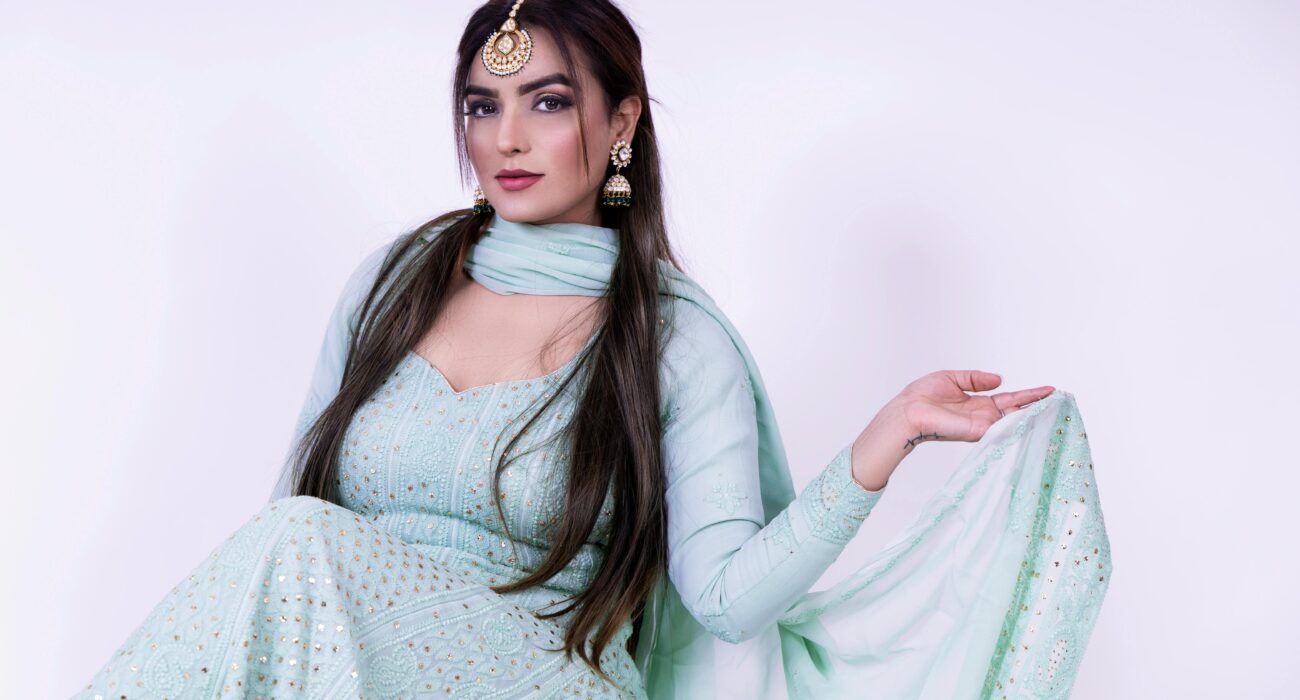
The silhouette of the Punjabi Salwar Suit is more than just a garment; it is a rhythmic expression of India’s most vibrant culture. In 2026, as the world leans toward “dopamine dressing”—the practice of wearing clothes that boost your mood—Punjabi wear has emerged as the global gold standard. From the mustard fields of Amritsar to the high-fashion ramps of Milan, the Punjabi Salwar Kurta continues to reinvent itself while keeping its spirited soul intact.
Here is why Punjabi wear remains an evergreen icon of style and comfort.
1. The Geometry of Comfort
At its core, the traditional Punjabi suit consists of the Kurta (tunic) and the Salwar (tapered trousers). The classic Patiala Salwar, characterized by its numerous pleats, was originally designed for the Royalty of Patiala.
The beauty lies in the “Fall.” The heavy draping of the pleats at the back of the legs provides a regal volume that moves gracefully with every step. In 2026, we are seeing a shift toward the “Straight-Cut Suit,” which offers a more streamlined, corporate-friendly silhouette, proving that Punjabi wear can transition from a wedding floor to a boardroom with ease.
2. Phulkari: The Embroidery of Dreams
No discussion on Punjabi wear is complete without mentioning Phulkari (flower-work). Traditionally handcrafted by the women of Punjab, this embroidery uses silk threads on coarse cotton (khaddar) to create intricate geometric patterns.
Trend Alert 2026: Designers are now moving away from the traditional “Bagh” (heavy Phulkari) and opting for “Minimalist Phulkari.” This involves delicate floral motifs on organza or sheer silk dupattas, making the outfit breathable and modern without losing its artisanal heritage.
3. The Dupatta: The Crown Jewel
The Dupatta (scarf) is the emotional anchor of the Punjabi suit. Whether it is a heavy velvet wrap for a winter wedding or a light Chiffon breeze for the summer, the way a dupatta is draped defines the entire look.
In 2026, the “Cowl-Drape” has become a street-style favorite in Chandigarh and Delhi, where the dupatta is pinned to one shoulder and draped like a Greco-Roman gown. It’s a perfect example of how Gen Z is taking traditional Punjabi elements and giving them a “Global-Village” twist.
4. Fabric Innovation: The 2026 Shift
While cotton and silk remain staples, the Punjabi fashion industry is currently obsessed with Sustainable Hemp-Silk and Banana Fiber Crepe.
-
Durability: These fabrics mimic the luster of traditional Punjabi Gota work but are much lighter.
-
The “Jutti” Pairing: No Punjabi suit is complete without the Mojari or Jutti. In 2026, we see “Memory Foam Juttis” becoming a massive hit, combining the hand-embroidered leather look with the comfort of a high-end sneaker.
5. The Men’s Kurta Pajama Revolution
Punjabi fashion for men is equally iconic. The Muktsari Kurta Pajama, characterized by its stiff collar and slim-fit silhouette, has become a symbol of rugged elegance. Unlike the flowing kurtas of Lucknow, the Punjabi version is structured and powerful.
In 2026, the trend has shifted toward “Earth-Toned Monochrome”—think sage greens, slate greys, and sand browns—replacing the loud whites and blacks of the past decade.
The Verdict
The Punjabi Salwar Kurta is a survivor. It has survived the onslaught of fast-fashion jeans and Western dresses by being inherently more versatile. It is a canvas that accepts everything—from the heavy gold thread of Gota Patti to the sleek, digital prints of modern tech-wear. As we embrace 2026, Punjabi wear stands tall as a testament to a culture that knows how to celebrate life, one pleat at a time.